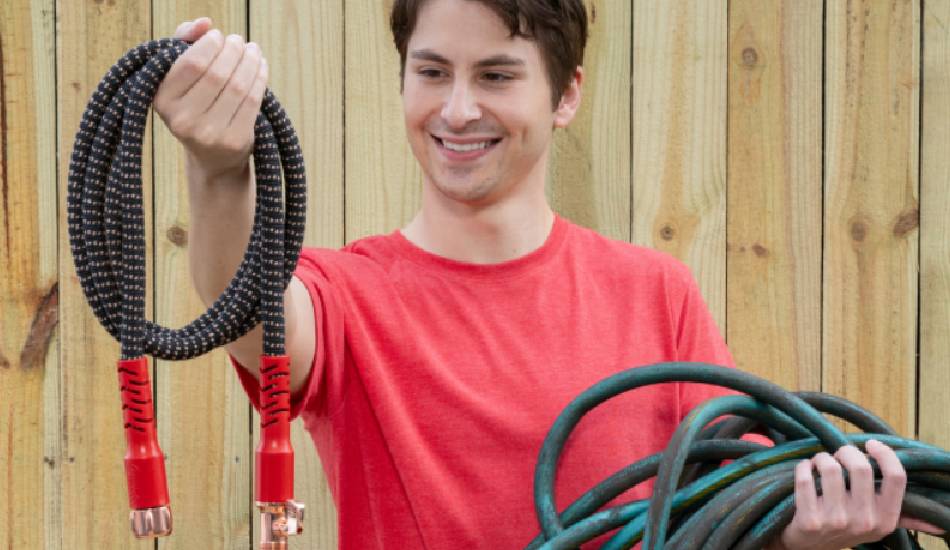
Expandable hoses like the Pocket Hose Copper are popular for good reason: they're light, they shrink back down after use, and they don't kink the way old rubber hoses do. The trade-off is that the stretchy inner tube needs a bit more respect. Treat it right and it'll keep watering season after season.
1. Turn the water on slowly
A sudden blast of full water pressure is the hardest moment in an expandable hose's life. Open the spigot gradually and let the hose expand evenly. If your home's water pressure runs high, a simple inline pressure regulator is an inexpensive way to protect it.
2. Drain it after every use
Turn off the spigot, then squeeze the nozzle to release the remaining pressure and water. Water left sitting inside keeps the inner tube stretched and can encourage mildew. A fully drained hose shrinks back properly and stores neatly.
3. Keep it out of the sun when you're done
UV light and heat are tough on the latex or TPE inner tube. Leaving the hose baking on a hot patio all summer shortens its life. Coil it loosely and store it somewhere shaded.
4. Never leave it pressurized
Shutting the nozzle but leaving the spigot open keeps the hose fully expanded for hours. That constant tension is a common cause of early leaks. Always shut the water off at the spigot.
5. Watch out for sharp edges
The outer fabric protects the inner tube, but it isn't armor. Avoid dragging the hose across rough concrete, rose bushes, metal fencing or sharp landscape edging.
Quick check: if the hose expands unevenly or develops a bulge, stop and inspect it before the next use.
6. Look after the copper fittings
Solid fittings are one of the best features of a premium expandable hose. Keep them working smoothly:
- Check the rubber washer inside the connector each season and replace it if it's cracked or flattened.
- Hand-tighten connections — overtightening with a wrench can damage the washer and threads.
- Wipe off mud and grit so the threads seat cleanly.
- A little patina on copper and brass is normal and doesn't affect performance.
7. Store it indoors for winter
Freezing temperatures can split the inner tube. Before the first frost, drain the hose completely, let it dry, and bring it into a garage, shed or basement.
8. Clean the nozzle now and then
Mineral deposits from hard water can clog spray patterns. Soak the nozzle in a mix of warm water and white vinegar, then rinse it clean.
The bottom line
Most expandable hose failures come from pressure, sun and freezing — and all three are easy to manage. A few seconds of care after each use is what separates a hose that lasts one summer from one that lasts many.