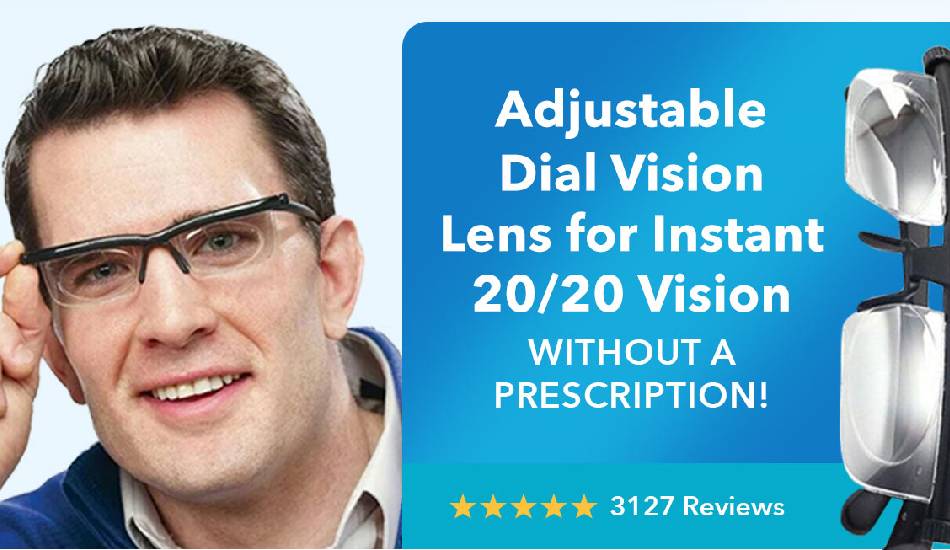
If you own reading glasses for the couch, another pair for the computer and yet another for driving, you know the routine: the right pair is always in the other room. Adjustable vision lenses — sometimes called adjustable-focus or variable-focus glasses — promise one frame that adapts to what you're looking at. Here's what to know before you try a pair.
How adjustable lenses work
There are a few different designs on the market:
- Dial-adjusted lenses. A small dial on each side of the frame changes the shape or position of the lens, letting you tune the focus for each eye.
- Fluid-filled lenses. A flexible membrane holds a clear fluid. Adjusting the amount of fluid changes the curve of the lens, and with it, the focusing power.
- Sliding-lens designs. Two lens elements slide across each other to shift the focal strength.
Whatever the mechanism, the idea is the same: you adjust until text, screens or distant objects look sharp.
Who they tend to suit
People with presbyopia
From our 40s onward, most of us find it harder to focus up close. Adjustable glasses can cover reading, screen work and middle distances without a drawer full of readers.
People whose vision fluctuates
Some people notice their vision varies with time of day or eye fatigue. Being able to fine-tune focus can make those swings easier to live with.
Backup and travel pairs
Adjustable glasses make a handy spare to keep in the car, a desk drawer or a travel bag — useful if your everyday glasses break or go missing.
Adjustable glasses are a convenience tool. They don't replace a proper eye exam or a prescription from an eye care professional.
Things to keep in mind
- Range limits. Each model covers a specific range of focusing power. Check that it matches your needs.
- Astigmatism. Most adjustable designs correct focus but not astigmatism, so results vary for people who have it.
- Field of view. Some designs have a smaller sharp zone than custom lenses.
- Style. Mechanisms can make frames a little bulkier than standard glasses.
Getting the best results
- Adjust one eye at a time, covering the other eye with your hand.
- Use good lighting when you set the focus for reading.
- Re-adjust when you switch tasks — reading, screens and distance each need a different setting.
- Clean lenses with a microfiber cloth; avoid paper towels that can scratch.
Protect your eyes outdoors, too
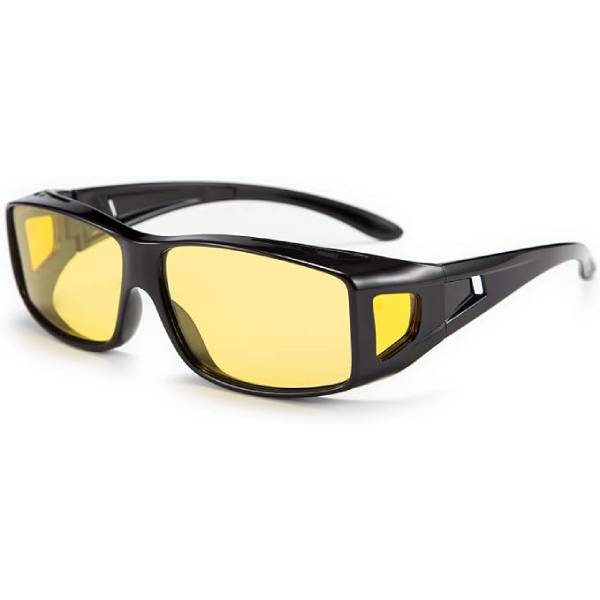
Whatever you wear for focus, UV protection matters outside. If you already wear prescription glasses, fit-over polarized sunglasses are an easy way to cut glare while driving without buying prescription sunwear.
Sudden changes in vision, eye pain, flashes of light or new floaters are reasons to see an optometrist or ophthalmologist promptly. Regular eye exams are the best way to keep track of changing vision.